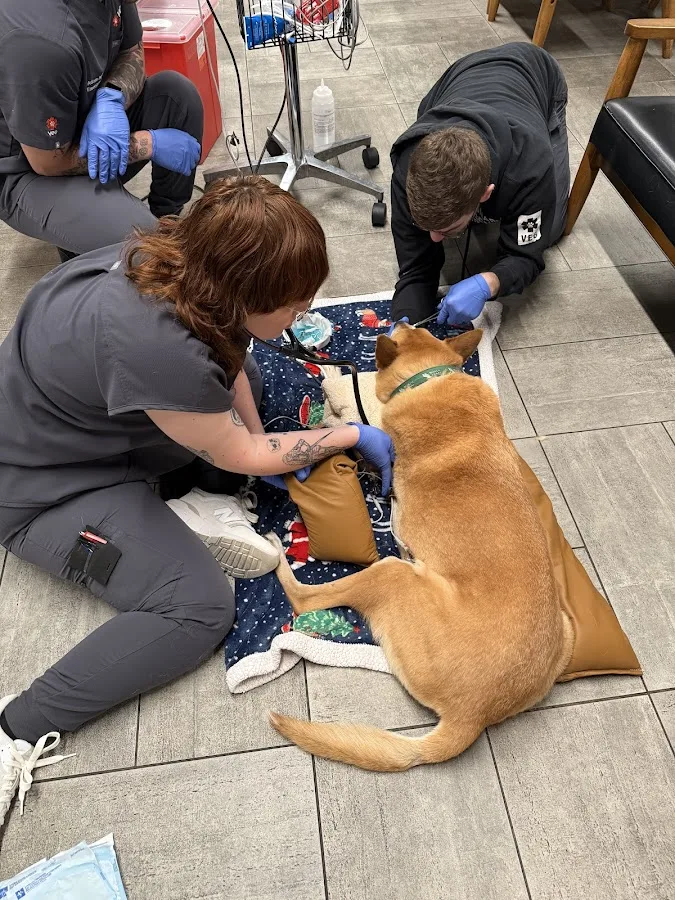
At an emergency veterinary clinic, the order pets are seen may not match the order they arrived. Triage is an initial assessment that helps the team decide which patients need attention sooner based on how urgently they appear to need care. It is a way to prioritize limited clinical attention as situations unfold—not a judgment about which owner arrived first or whose concern matters.
Triage is about urgency, not place in line
The first assessment is not a complete diagnosis. It gives the team an initial picture of the concern and the animal’s apparent condition to help set priority; identifying the cause may require further evaluation.
For example, imagine one pet arrives with a concern that appears stable at the initial check while another arrives with a more immediate need for attention. The later arrival may be assessed first. This hypothetical example illustrates the purpose of triage; it does not predict how a clinic will classify any particular animal.
Why the order can change while you wait
Triage is not necessarily a one-time decision. A pet’s apparent condition can change, and the team may need to reconsider priority as new information becomes available or other patients arrive. The waiting area can therefore function less like a fixed numbered line and more like a set of cases whose urgency may need ongoing attention.
If you notice a meaningful change in your pet while waiting, tell the veterinary team promptly so they can reassess the situation. Be concrete about what changed and when you noticed it. If there is more than one change, lead with the newest one, then briefly give the sequence that came before it; a concise timeline makes the update easier to understand. This gives staff new information to consider; it does not mean the owner should assign a triage category or try to predict the clinical response.
Assessment order and treatment timing are different: triage sets priority, while the timing of later care depends on the patient’s needs and what the team learns.
What to tell the team during the first assessment
A concise timeline can help staff understand the immediate concern. State the main change you observed, when it began, and whether it has stayed the same, improved, worsened, or come and gone. If the timing is uncertain, say so rather than guessing. A description of what you saw is usually clearer than a broad label alone, because the label may mean different things to different people. Also mention any medication or other response already given, with its approximate time, so the team has that context.
Separate direct observations from possibilities. For instance, you might explain that your pet was near a particular substance and that you are unsure whether any was swallowed; that communicates both the possible exposure and the uncertainty. Mention relevant known context, such as an existing condition or a recent event, when it helps describe the situation. You do not need to build a complete medical history in the first sentence—start with the change that brought you in, then answer the team’s follow-up questions.
If several people witnessed different parts of the event, identify which details each person saw firsthand. This can keep a timeline from blending confirmed observations with secondhand guesses. The aim is not to present a polished case, but to give the veterinary team a usable account of what has happened.
What triage does—and does not—tell you
A priority assessment cannot predict the full course of care. The team may need further assessment before explaining what comes next; that plan depends on the findings and the animal’s situation.
For the clinic’s address and contact details, see Lubbock Small Animal Emergency Clinic.