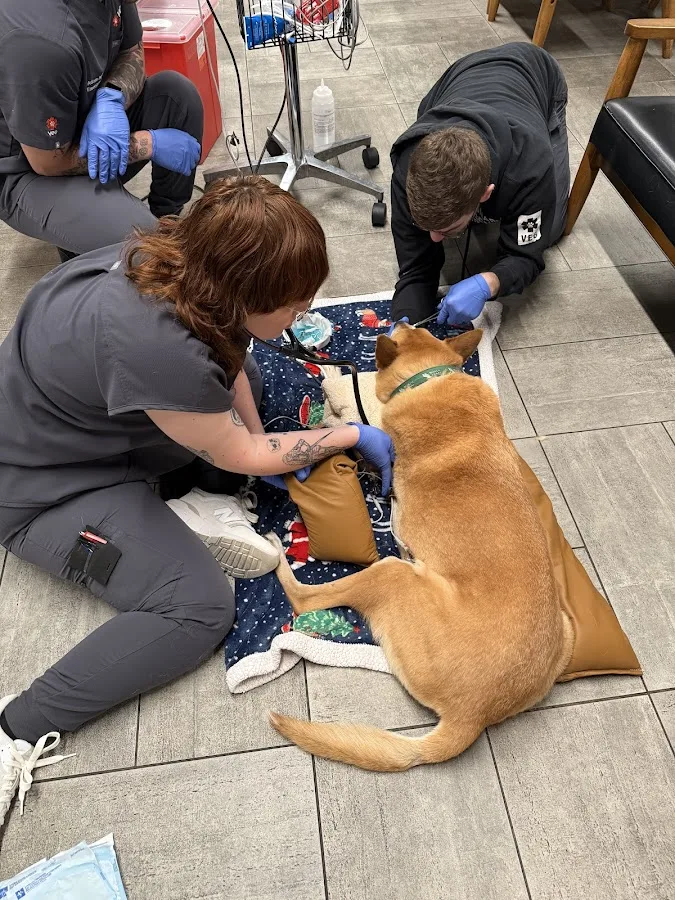
VEG identifies its San Antonio hospital as a canine blood-bank location and says stored blood may be available to a VEG hospital or shared with a local veterinarian. That resource can support veterinary care, but the treating veterinarian determines whether a transfusion is appropriate and which product fits the dog’s clinical needs.
Blood products address different clinical needs
“Transfusion” is a broad term: different blood products serve different purposes. The American Animal Hospital Association (AAHA) explains that plasma contains clotting factors and other proteins. Veterinarians may consider it for clotting disorders, including some associated with anticoagulant rodenticide exposure or severe hemorrhage. Plasma has also been used to provide protein-related support for some critically ill patients. These are examples of clinical uses, not a single treatment for every dog who is bleeding or unwell; the underlying problem guides the choice.
One example is canine freeze-dried plasma, which AAHA describes as an alternative to fresh frozen plasma. The products differ in storage and preparation: fresh frozen plasma is kept frozen and typically takes 30–45 minutes to thaw, while freeze-dried plasma can be stored at room temperature and prepared for use in as few as three minutes. In its comparison, AAHA notes that fresh frozen plasma may be kept frozen for up to five years, but clinically significant labile clotting factors are lost after one year. The article specifies that freeze-dried plasma can be stored at 34–77°F for one year. These differences can matter to veterinary teams planning for access and preparation, but they do not determine which product an individual patient needs.
Transfusion decisions require diagnosis and monitoring
Choosing and administering plasma requires veterinary assessment, not an owner’s selection based on symptoms. AAHA explains that freeze-dried plasma requires a veterinary prescription and must be administered under a licensed veterinarian’s direct or indirect supervision. The veterinarian needs an accurate clinical diagnosis to determine whether transfusion is indicated and to calculate an appropriate volume and administration rate. Close monitoring is also necessary because transfusion reactions can occur. AAHA reports that a recent study found plasma-transfusion reactions in 4.5% of dogs; early studies of freeze-dried plasma suggested more similar allergic reactions, though larger-scale clinical data are needed.
What VEG San Antonio’s role adds
VEG ER for Pets in San Antonio identifies its hospital at 602 Northwest Loop 410 as a VEG Blood Bank location for dogs. The hospital says stored canine blood may be available to a VEG hospital or shared with a local veterinarian. Its 24-hour emergency setting provides a local context for that role: the stored blood may support care across VEG hospitals or with a local veterinary team, while the clinicians treating the dog determine the medical plan.
How to use the information during an urgent situation
If a veterinarian discusses transfusion, ask what clinical problem the treatment is intended to address, why the proposed product fits that problem, and what monitoring it involves. When a local veterinarian and an emergency hospital are coordinating care, ask how they will work together and whether the canine blood-bank resource is relevant to the plan. These questions focus on the medical reasoning and coordination needed for the patient, rather than asking an owner to choose a product.
VEG’s San Antonio hospital page says the location is open 24 hours and invites pet owners to call and speak with a veterinarian. The hospital also accepts walk-ins without appointments and says owners can stay with their pets throughout the visit. In an urgent situation, a call or walk-in can connect the owner with the emergency team to discuss the concern and next steps while remaining involved in the pet’s care.