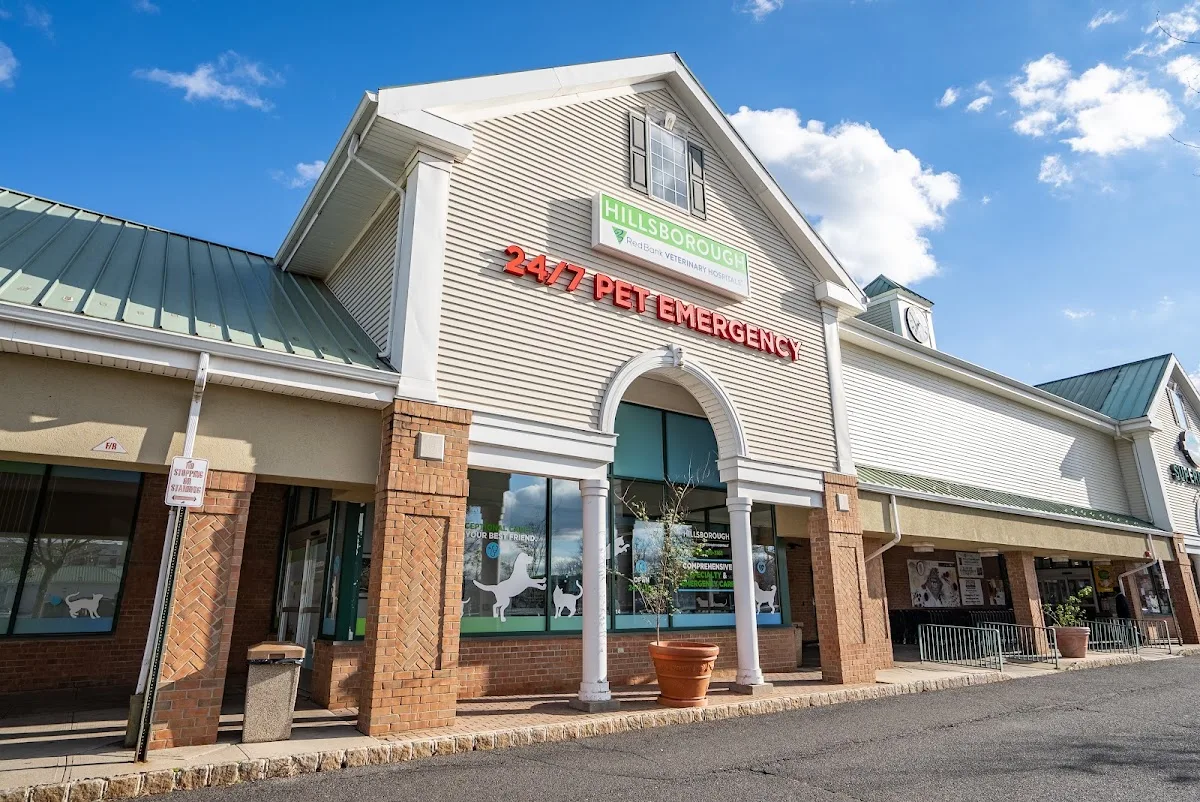
When your pet’s condition changes quickly, the hardest part isn’t always finding an address—it’s confirming that the veterinary ER workflow matches your animal’s specific needs. For Red Bank Veterinary Hospital (RBVH) - Hillsborough, the hospital publicly states it is “Open 24/7/365 for Emergencies,” with a direct line at (908) 359-3161. That makes the next step clearer: before you drive, call and verify triage logistics so the team can start the right path as soon as you arrive.
Confirm the emergency pathway with one call
RBVH’s contact page emphasizes 24/7 emergency access, but the exact flow can depend on what’s happening with your pet. Call (908) 359-3161 and be ready to answer a few high-signal questions. A good goal for the first call is not “Is this place open?”—it’s “Will your team be able to triage my case promptly when we arrive?”
To make that conversation efficient, say the basics in this order: species and age, what you’re seeing right now (for example, breathing trouble, uncontrolled bleeding, suspected ingestion), and how fast it started. If you have it, add whether your pet is eating/drinking at all, and whether there were any recent accidents, medication changes, or toxin exposure concerns.
Use this 30-second triage script
“I’m calling about an emergency case. My [dog/cat] is [age] and started [symptom] about [time ago]. Right now [current status]. Can you tell me if you’re ready to triage and see us on arrival?”
Then ask one follow-up: “Do you want us to come straight in, or is there a specific arrival/check-in process for emergency triage today?” Even when a hospital is open 24 hours, the practical logistics can vary by staffing and department.
Bring a “triage packet” that helps the ER move faster
Emergency veterinary care often includes rapid assessment and diagnostics. You can reduce delays by giving the triage team usable information. RBVH can only work with what you can provide—so before you leave, gather a compact packet you can show on your phone or paper folder.
- Medical summary: vaccine status if known, current conditions, and a list of medications or supplements (include doses if possible).
- Timeline: when symptoms started, what changed first, and whether symptoms are improving or worsening.
- Evidence: photos/videos of symptoms, vomit/diarrhea appearance if relevant, and any suspected foreign object or packaging from potential ingestion.
- Prior test results: discharge paperwork, imaging reports, or lab summaries from recent vet visits.
If you’re unsure what’s “important,” default to anything that helps identify cause and timing. In an emergency, that’s often what guides the veterinary team’s next questions.
Know the key logistics: where, how to reach them, and what “24/7” means
RBVH - Hillsborough’s public details include an address at 649 Route 206, Hillsborough, NJ 08844 and a phone at (908) 359-3161. The hospital also notes specialist hours can vary by department, which is a helpful nuance for owners who assume “open” means “every service instantly in every situation.”
So when you call, treat it as a real verification step. Confirm both: that emergency triage is available for your case category, and that you’ll be routed appropriately once you arrive. This is especially important if your pet’s emergency involves complex needs (for example, critical breathing issues, severe trauma concerns, or suspected ingestion) where the ER may coordinate multiple capabilities.
Why reviews can’t replace verification
Public reviews show a 4.5 rating from 1,192 reviewers—an encouraging signal about consistency from many pet owners. Still, reviews don’t tell you how your specific emergency will be triaged in the moment. Your best protection is to confirm current workflow by phone right before driving.
Ask the ER what information they still need
Even after you’ve provided your story, you can close the loop by asking one final question: “Is there anything else you need before we arrive?” That can include whether they want to see a medication label, vaccination record, or additional details about timing.
In practice, this kind of targeted question can help the veterinary team plan intake, reduce back-and-forth at the desk, and focus on veterinary assessment as soon as your pet is seen.
What to do if you’re on the way
If your drive is already underway, keep the triage packet accessible and ready to show. If your pet’s condition changes, call again and share the update quickly. In emergency situations, small changes in breathing, alertness, vomiting frequency, or behavior can affect how quickly triage priorities shift.
RBVH - Hillsborough lists 24/7/365 emergency access, but the most effective way to use that availability is to verify your specific veterinary ER pathway by phone, arrive with a clear triage packet, and ask what the team needs to start work immediately. That combination helps your pet’s case move from “emergency search” to “organized triage” as efficiently as possible.